No clinic, no waiting room, no drive home
Mobile IV Therapy in Lakewood, CO
The point of a mobile service is not convenience. It is that when you are dehydrated enough to need fluids, getting in a car is the worst available idea.
- A critical-care nurse comes to your address — house, apartment, hotel or office
- 30 to 60 minutes, with the nurse present for all of it
- Vital signs before treatment and again at the end
- Same-day where available
Speak to someone now
What "mobile" actually means here
Lakewood has a reasonable number of places to get an IV. Almost all of them are storefronts: you book a slot, drive to a strip mall off Wadsworth or Kipling, sit in a recliner for an hour, then drive yourself home.
That is a fine model if you are well and topping up. It is a poor one if you have been vomiting since 2am.
Mobile means a nurse comes to where you already are, with everything needed to assess you and treat you, and stays until it is finished. You do not park. You do not sit in a lounge with strangers. If you are too unwell to be driving, you are not driving.
It also means the assessment happens in front of the person who will be doing the treatment, in the place where you actually are — which is a better vantage point than a booking form.
Who arrives
An ICU- or ER-trained critical-care nurse. Every visit, without exception.
This is the single biggest difference between a mobile medical service and a wellness delivery service. Critical-care nurses spend their working lives placing and managing IV lines in unwell people. Difficult veins, dehydrated patients, and the judgement to recognise when someone in front of them is deteriorating rather than just uncomfortable.
You will be told who is coming before they arrive. Colorado practitioner licences are public record and can be checked.
When a house call is the wrong choice
If you cannot keep down even small sips, if you are dizzy enough that standing is difficult, if there is blood in your vomit or stool, chest pain, breathing difficulty, confusion, or you have not passed urine for many hours — that is an emergency department, and a mobile IV is a delay you cannot afford. Call 911. Your nurse will tell you the same thing, and decline the visit.
Vitals, before and after
Vital signs are taken on arrival before anything is placed, and taken again at the end of the visit before your nurse leaves.
We say this on every page because it is unusual. Monitoring during a session is common; re-checking afterwards is not. It is how you find out whether the treatment achieved anything, and it is how a clinician catches the late-appearing problems.
Full detail on the visit: what happens on a visit
Coverage across Lakewood
We come across Lakewood and the surrounding west metro: Applewood and the Crown Hill Park area in the north, Two Creeks and Lakewood Heights through the middle, Glennon Heights, and south and west along the Alameda corridor and up toward William F. Hayden Park on Green Mountain and Red Rocks Community College.
Hotels along the Kipling and Wadsworth corridors are frequent stops, as are offices and short-term rentals. If your address is close to the edge of that, call and ask rather than guessing.
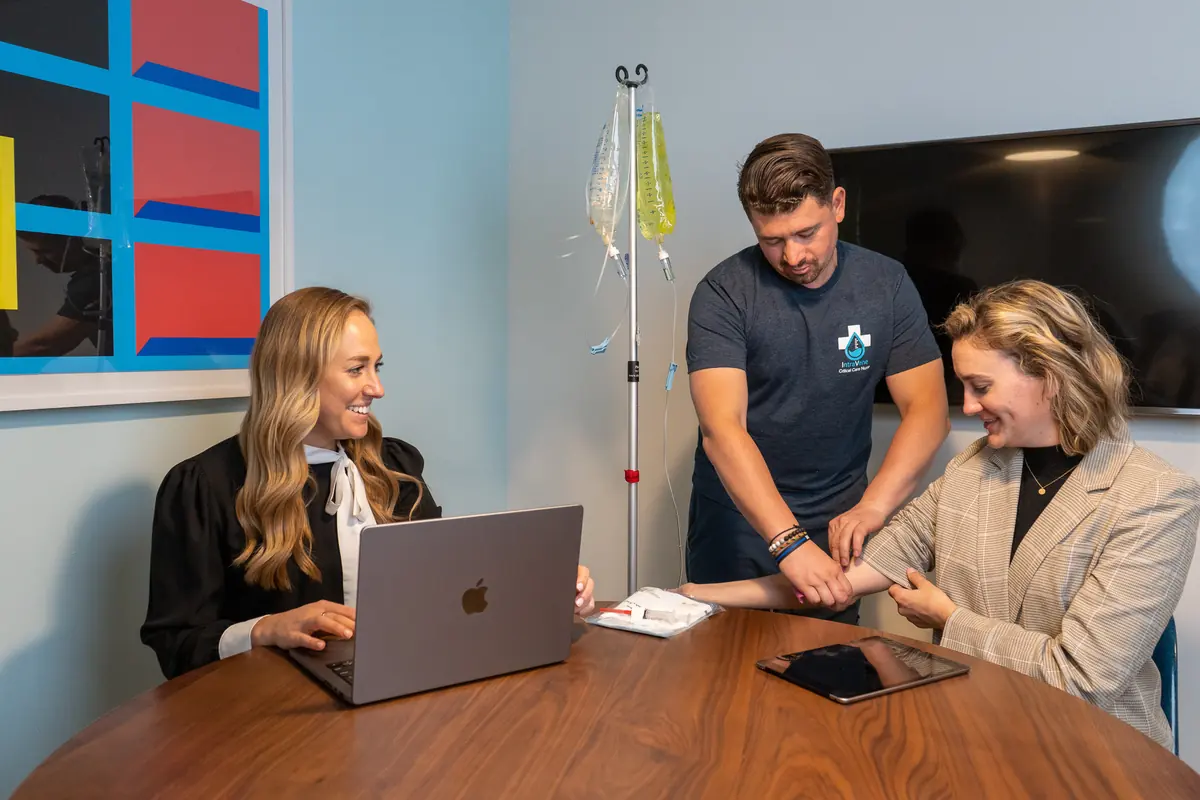
What we bring, and what we do not
Your nurse arrives with fluids, the equipment to place and monitor a line, and what is needed to assess you properly.
We do not carry supplemental oxygen, and we cannot run laboratory tests or imaging — which means we can treat dehydration where dehydration is the problem, but we cannot tell you what is causing your symptoms. If a diagnosis is what you actually need, an urgent care or emergency department is the right destination and we will say so.
Frequently asked questions
How is this different from an IV bar?
An IV bar is a place you go. This is a nurse who comes to you. The clinical difference is staffing and assessment: a critical-care nurse assessing you where you are, rather than a booking form and a recliner.
Can you come to a hotel?
Yes — hotels, short-term rentals, offices and workplaces as readily as houses. Hotels along Kipling and Wadsworth are regular stops.
How long does it take?
Usually 30 to 60 minutes for the treatment itself, plus a short assessment at the start and the vitals check at the end. Your nurse is with you throughout.
Do I need to be home alone or is company fine?
Company is fine, and if you are genuinely unwell it is a good idea to have someone there.
What do you need from me when you arrive?
Somewhere to sit or lie down, and a list of any medications you take. That is genuinely it. Your nurse brings everything else, including somewhere to put it.
What happens if my veins are difficult?
It comes up, particularly when someone is already dehydrated — that is precisely when veins are hardest to find. Critical-care nurses do this on difficult patients as a matter of routine. If it genuinely cannot be done safely, you are not charged.