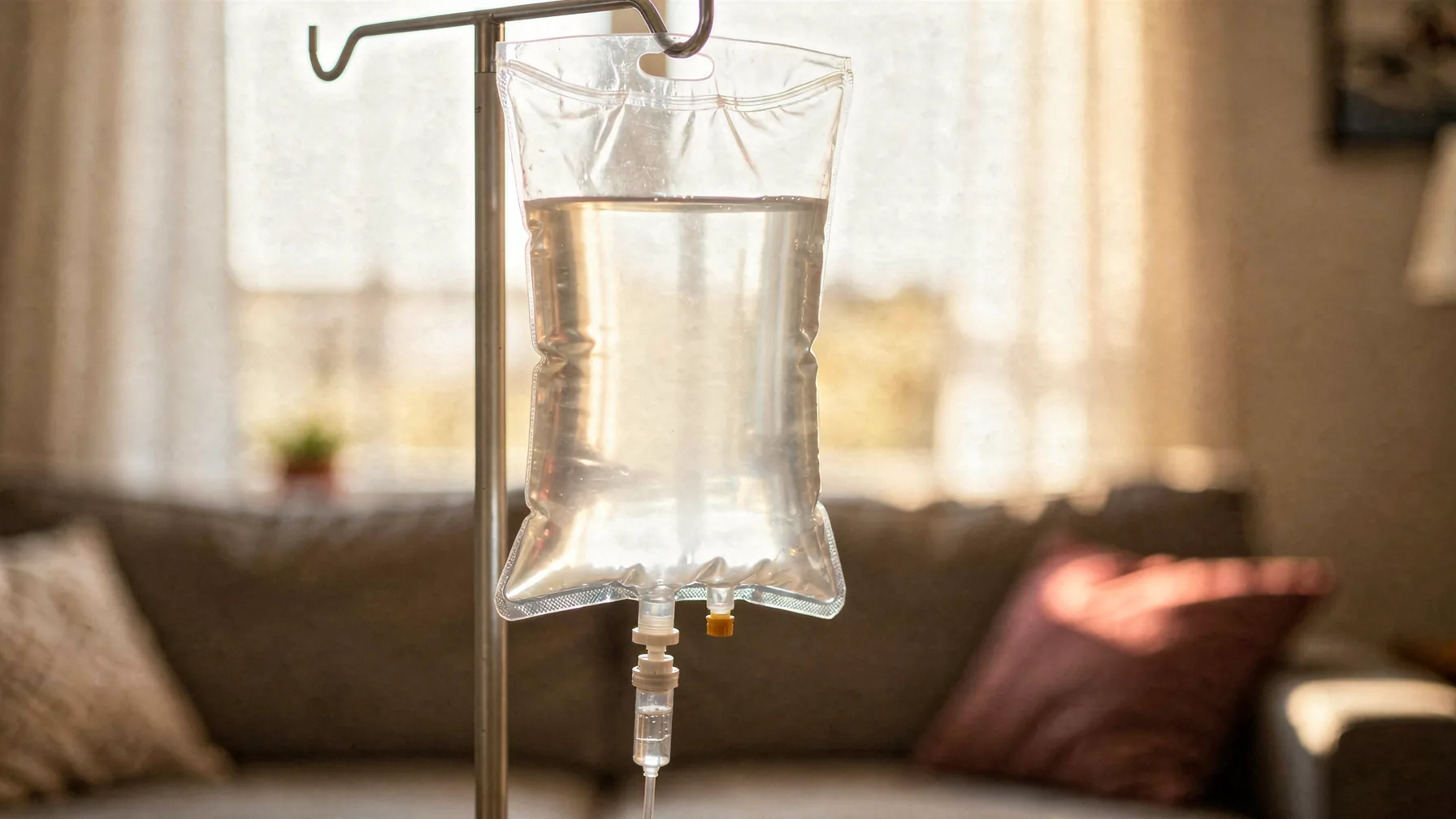
Fluids and electrolytes, delivered by a critical-care nurse
IV Hydration in Lakewood, CO
Dehydration is one of the few things an IV genuinely fixes faster than anything else. It is also one of the most over-sold services in Colorado. Both of those are true, and this page tries to be useful about which situation you are in.
- ICU- and ER-trained critical-care nurse at your address
- Vital signs before treatment and again afterwards
- Same-day where available
- Straight answers about when you do not need this
In short
IV hydration puts fluid and electrolytes straight into a vein, which is the fastest route back when a stomach bug or vomiting stops you keeping drinks down. If you can drink and keep it down, an oral rehydration solution or electrolyte drink taken in small, frequent sips corrects ordinary dehydration perfectly well for a few dollars, and this page says so. In Lakewood, an ICU- or ER-trained critical-care nurse comes to your address, same day where available, checks your vital signs before and after, and stays throughout. Everything used is commercially manufactured, nothing is compounded, and supplies are single-use. If you have kidney or heart problems, tell your nurse before booking. This page covers what dehydration does, when oral fluids are enough, what is in the bag, and the signs that mean an emergency department instead.
Need fluids in Lakewood today?
Book a mobile IV visit by phone. You are screened first, and if you do not need an IV, you will be told so. Or call (303) 720-7740.
What dehydration actually does
Losing fluid is not just losing water. You lose sodium, potassium and chloride with it, and it is the electrolyte loss that produces most of what you feel — the headache, the flat exhausted feeling, the dizziness on standing, the nausea that makes drinking harder just when drinking matters most.
That last part is the trap. Mild dehydration is self-correcting: you feel thirsty, you drink, you recover. The problem arrives when the thing causing the fluid loss also stops you replacing it. A stomach bug that rejects every sip. Vomiting that will not settle. At that point the gap widens no matter how motivated you are, and getting fluid past the stomach entirely is genuinely the fastest route back.
More on telling the difference: dehydration and stomach bugs
When oral fluids are enough — which is most of the time
If you can drink and keep it down, drink. We would rather tell you this and not take the booking than take it and have you conclude afterwards that you were sold something.
Small amounts, often
An oral rehydration solution or an electrolyte drink, taken in small amounts frequently rather than in large gulps, will correct ordinary dehydration perfectly well. A teaspoon or two every couple of minutes gets more fluid in than a glass that comes straight back up. This costs a few dollars and works.
When you do not need an IV
You do not need an IV for a hangover you can drink through. You do not need one after a hot day at Bear Creek if you are thirsty and otherwise fine. You do not need one because you feel generally low — that is a conversation with a primary care clinician, not a drip.
Wondering whether a mobile IV visit makes sense? A nurse screens you on the phone first.
What is in the bag
Every drip is discussed with you and prepared on site rather than arriving pre-selected, so you know what is going in before it does.
Commercially manufactured, nothing compounded
Everything we use is commercially manufactured — standard pharmaceutical fluids and additives, in their original packaging. Nothing is compounded, so there is no custom preparation from a compounding pharmacy in what goes into you, and no proprietary blend with an undisclosed ingredient list. Supplies are single-use and opened in front of you.
Why that matters
This is worth asking any provider about, not just us. Anything going straight into your bloodstream bypasses every defence your body has, and compounded sterile products are where regulators have found most of the problems in this industry.
What to ask any provider
If you want to know what to ask any provider about this — us included — that is set out here: how to choose an IV provider in Colorado
Who administers it
An ICU- or ER-trained critical-care nurse, who checks your vital signs before starting, stays with you throughout, and checks them again before leaving.
Intravene operates under independent medical oversight from Guardian Medical Direction, a national physician-led medical direction group. That oversight covers clinical practice, not the content of this website.
Wondering whether a mobile IV visit makes sense? A nurse screens you on the phone first.
Frequently asked questions
How fast does IV hydration work?
Fluid is in your circulation immediately, and most people notice a difference within the session. That is the genuine advantage over drinking when drinking is not staying down.
Is IV hydration better than drinking water?
Only when you cannot drink, or cannot keep it down. If you can drink, drinking works and costs almost nothing.
Can I get IV hydration for a hangover?
You can, and it will help with the dehydration part. It will not do anything the same fluids taken orally would not do if you can keep them down — so it is a convenience purchase rather than a medical one, and we would rather you knew that.
What if I have kidney or heart problems?
Tell your nurse before booking. Extra fluid is not automatically safe in those conditions, and the assessment may conclude this is not the right service for you.
How much fluid is in a bag?
A standard bag is a litre, which is roughly four cups. Most visits are a single bag, and your nurse will tell you what they are giving you and why before it goes up.
Will I need to get up during the session?
Possibly, and that is normal — a litre of fluid arriving over half an hour has to go somewhere. It is worth being somewhere with a bathroom nearby rather than, say, a parked car.
Do I need to do anything to prepare?
Eat something light beforehand if you can keep it down, wear sleeves you can push up, and have your medication list handy. Nothing else.

Signs you need more than fluids
Not passing urine for many hours · dizziness severe enough that standing is hard · confusion · a racing heart at rest · severe abdominal pain · blood in vomit or stool · fever with a stiff neck. These need an emergency department. Fluids may still be part of the answer, but not at home and not from us.